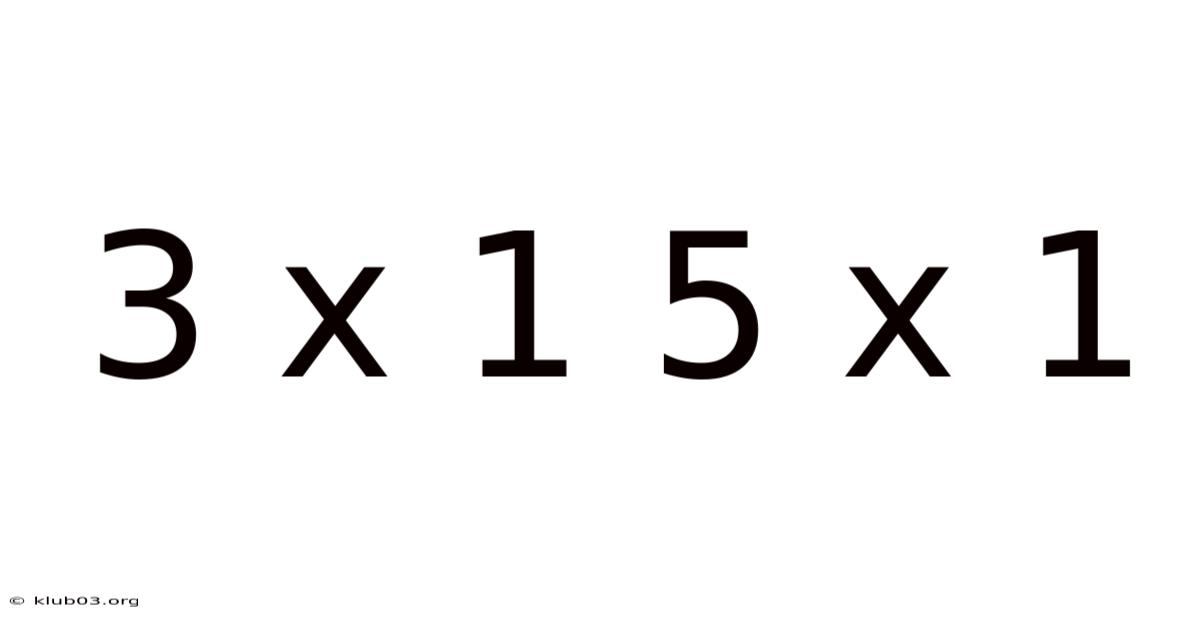
Understanding the Basics of Multiplication Through Simple Examples Like 3 × 1 and 5 × 1
Multiplication is one of the fundamental operations in mathematics that serves as the building block for more complex calculations. Now, when we look at simple equations like 3 × 1 and 5 × 1, we might think these are too basic to warrant deep discussion, but these examples actually reveal profound mathematical principles that apply across all levels of mathematics. Whether you are a student learning arithmetic for the first time or an adult reviewing foundational concepts, understanding why 3 times 1 equals 3 and 5 times 1 equals 5 opens the door to comprehending the identity property, the commutative property, and the very nature of scaling in mathematics.
The Identity Property of Multiplication
At the heart of both 3 × 1 and 5 × 1 lies the identity property of multiplication. Because of that, this property states that any number multiplied by 1 remains unchanged. But when we calculate 3 × 1, we are essentially asking, "What is three groups of one item? That's why " The answer is simply three items total. Consider this: similarly, 5 × 1 asks for five groups of one, which equals five. This seemingly obvious concept is actually crucial because it establishes 1 as the multiplicative identity—a number that preserves the identity of whatever number it multiplies.
This property holds true for all real numbers, not just whole numbers. Whether you multiply decimals, fractions, negative numbers, or irrational numbers by 1, the result remains the original number. This consistency makes 1 uniquely powerful in mathematics and serves as a foundation for more advanced algebraic manipulations where maintaining the value of expressions is essential Took long enough..
Commutative Property and Order of Operations
Another important concept illustrated by 3 × 1 and 5 × 1 is the commutative property of multiplication. This property tells us that the order of factors does not change the product. Now, the same applies to 5 × 1 and 1 × 5. So, 3 × 1 equals 1 × 3, and both equal 3. While this might seem trivial with these specific numbers, the commutative property becomes increasingly important when working with complex algebraic expressions, matrices, and higher-level mathematics where rearranging terms can simplify calculations significantly.
People argue about this. Here's where I land on it And that's really what it comes down to..
Understanding that multiplication is commutative helps students develop number sense and flexibility in problem-solving. When faced with a difficult multiplication problem, knowing that you can rearrange the factors to make calculation easier is a valuable skill. Here's a good example: if someone struggles with 7 × 3, recognizing that 3 × 7 might be easier to compute mentally demonstrates practical application of this property.
Real-World Applications of Simple Multiplication
While 3 × 1 and 5 × 1 appear abstract, they manifest constantly in everyday situations. So this is 3 × 1. Still, consider a scenario where you are purchasing items: if you buy 3 packs of items containing 1 item each, you have 3 items total. Similarly, if a recipe requires 5 tablespoons of an ingredient and you are making 1 batch, you need 5 tablespoons—a practical example of 5 × 1.
In construction and design, dimensions often involve multiplication by 1. Day to day, a board that is 5 feet long and 1 foot wide has an area of 5 × 1 = 5 square feet. Understanding these basic multiplication facts allows for quick mental calculations in shopping, cooking, construction, and time management.
Building Blocks for Multiplication Tables
Mastering 3 × 1 and 5 × 1 serves as a
